
Quick Navigation
Benefits of the TriTech Light Steel Frame System
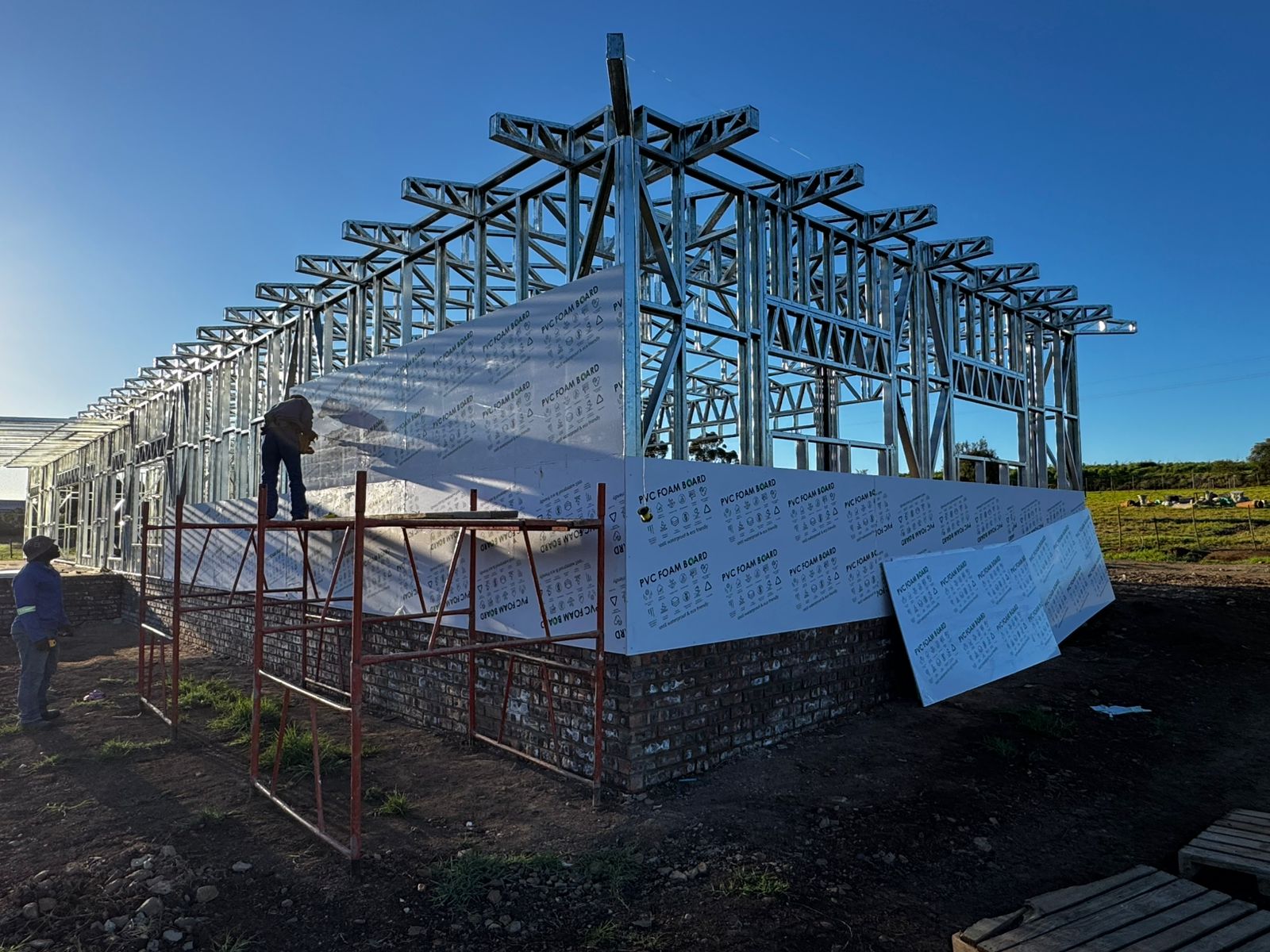
Light Steel Frames
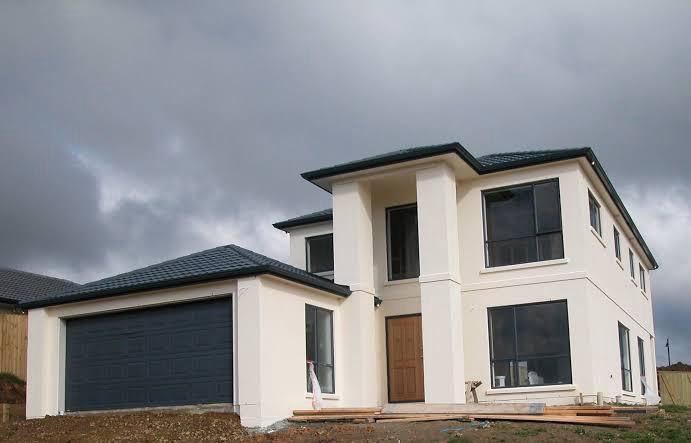
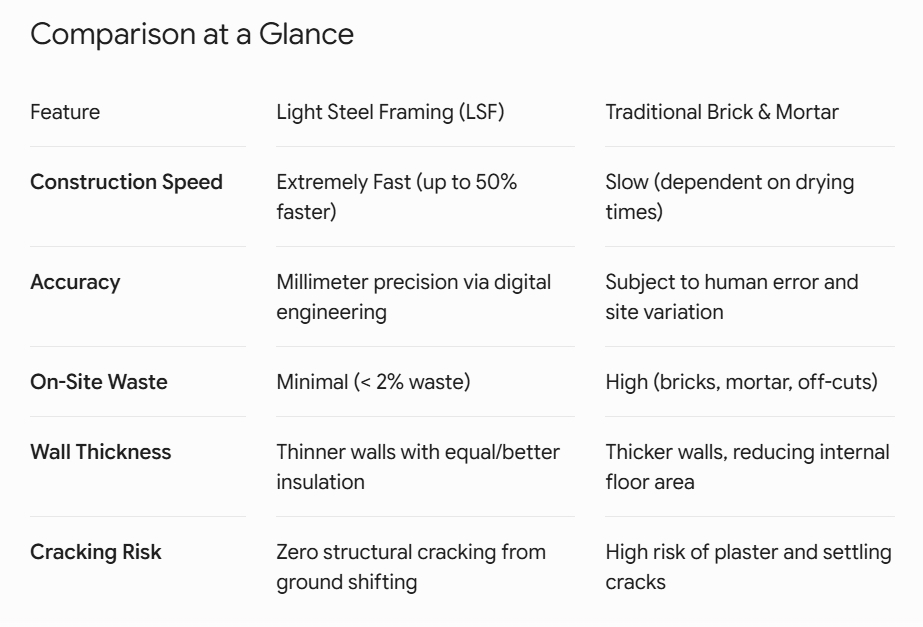
Building with Light Steel Framing (LSF) offers significant advantages over traditional brick-and-mortar construction, particularly when it comes to speed, precision, and long-term structural integrity.
Here is a breakdown of the primary benefits of LSF:
1. High Strength-To-Weight Ratio
Structural Integrity: LSF provides a superior strength-to-weight ratio compared to timber or brick. It is engineered to withstand extreme wind loads and seismic activity safely.
Consistent Quality: Steel doesn't have natural weak points like knots or splits in wood. It remains dimensionally stable over time, meaning it will not warp, shrink, twist, or sag.
Foundation Savings: Because steel frames are significantly lighter than heavy masonry walls, the structural load on the foundation is reduced. This often leads to simpler, more cost-effective foundation designs, especially on challenging or sloped terrains.
2. Unmatched Construction Speed
Pre-Engineered Efficiency: LSF components are manufactured off-site to exact millimeter specifications using computer-aided engineering (CAD/CAM). Once on-site, the frames assemble quickly like a puzzle, which can accelerate the structural build phase by up to 30% to 50% compared to traditional masonry.
Elimination of "Wet Work": Traditional building requires waiting days for mortar, concrete, and plaster to cure and dry before moving to the next stage. LSF is a "dry" building method, meaning electrical, plumbing, and interior finishes can begin immediately after erection.
Fewer Weather Delays: Because the skeletal structure goes up so rapidly, the building can be enclosed and made weather-tight much faster, reducing the unpredictability of seasonal weather delays.
3. High Precision and Aesthetic Freedom
Perfect Straightness: Steel frames are perfectly straight, resulting in dead-straight walls, sharp 90-degree corners, and square window/door openings. This makes installing cabinetry, tiling, and trim faster and visually flawless.
Design Flexibility: The inherent strength of steel allows for larger clear spans without the need for intrusive interior load-bearing columns. This makes LSF ideal for modern, open-plan architectural layouts.
4. Environmental Durability & Immunity
Pest and Termite Proof: Steel contains zero cellulose, making it completely immune to wood-boring insects, termites, and rodents. It requires no toxic chemical pest treatments.
Corrosion Resistance: High-quality light steel frames are hot-dip galvanized with a protective zinc coating. This shields the steel from atmospheric moisture and ensures excellent longevity even in highly corrosive coastal climates.
Non-Combustible: Steel is inherently non-combustible and will not contribute fuel to a fire, offering excellent passive fire safety for the structure.
5. Sustainability and Thermal Efficiency
Eco-Friendly Material: Steel is 100% recyclable. Most steel used in modern framing contains a high percentage of recycled content, and on-site material waste is virtually eliminated because the components are pre-cut to exact lengths.
Superior Insulation Performance: Because LSF walls are built as a hollow cavity system, they easily accommodate thick layers of high-performance thermal insulation (such as bulk glasswool or rockwool). Combined with external cladding, this system results in exceptional thermal resistance ($R-values$), keeping interiors cooler in summer and warmer in winter while driving down energy costs.
Benefits of the TriTech PVC Foam Board

Recyclable
PVC (Polyvinyl Chloride) Foam Board is a widely used material in signage, construction, and model making. While it is technically recyclable, the process is more complex than recycling standard plastics like PET (water bottles) or HDPE (milk jugs).
Here is a breakdown of its recyclable properties and the challenges involved:
Technical Recyclability
PVC foam board is a thermoplastic, meaning it can be melted down and reshaped multiple times without significant chemical degradation.
Material Composition: It consists of PVC resin mixed with foaming agents to create a lightweight, "expanded" core.
Closed-Loop Potential: In industrial settings, "pre-consumer" waste (scraps from the manufacturing process) is almost always recycled. These scraps are ground into granules, melted, and fed back into the production line to create new boards.

Strong & Durable
PVC Foam Board is prized in the construction and signage industries because it balances a lightweight "expanded" core with a rigid, high-density exterior. Its durability is primarily a result of its chemical composition and the manufacturing process known as co-extrusion.
Despite being lightweight, PVC foam board offers impressive structural integrity.
High Strength-to-Weight Ratio: The honeycomb-like internal cell structure allows the board to support significant weight without the bulk of solid plastic or wood.
Flexural Strength: It has a high resistance to bending. While it is not as "stiff" as aluminum, it maintains its shape well over large surface areas, making it ideal for wall cladding and partitions.
Impact Resistance: Unlike traditional PVC pipes which can be brittle, the foam core acts as a shock absorber. It is resistant to denting and cracking from accidental drops or blunt force.

Moisture Proof
PVC Foam Board is essentially a waterproof material by design. Because it is made of Polyvinyl Chloride—a synthetic plastic—it does not possess the organic fibers found in wood or the metallic properties of aluminum, making it immune to the most common types of moisture-related damage.
Here is a breakdown of why it is considered a premier moisture-proof material:
1. Closed-Cell Structure
The "foam" in PVC foam board is created through a process that results in a closed-cell structure.
Water Barrier: Unlike a sponge or open-cell foam, the tiny air bubbles inside the board are sealed off from one another. This prevents water from "wicking" through the material.
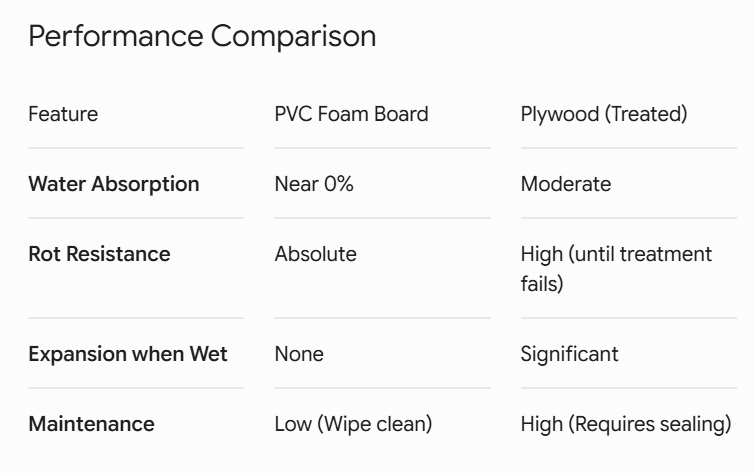
Zero Absorption: Even if the board is submerged or the outer skin is cut, the internal cells do not soak up liquid. This ensures the board maintains its original weight and structural integrity in wet conditions.
2. Resistance to Biological Growth
Moisture usually brings two major problems to building materials: rot and mold. PVC foam board is immune to both.
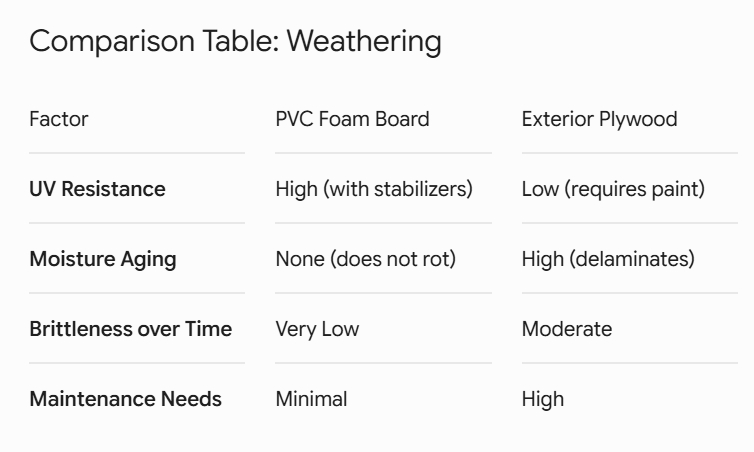
Anti-Rot: Wood fibers break down when wet due to fungal decay. Since PVC is inorganic, there is no food source for the fungi that cause rot.
Mold and Mildew: While surface mold can grow on any material if dirt and moisture are present, it cannot penetrate the surface of PVC foam board. It can be easily wiped clean with standard detergents without damaging the substrate.
3. Dimensional Stability
Traditional materials like plywood or MDF (Medium Density Fiberboard) expand and contract significantly when they absorb humidity.
No Warping: PVC foam board does not swell when it gets wet or shrink as it dries. This dimensional stability is critical for outdoor signage, bathroom cabinetry, and marine decking where tight tolerances are required.
Delamination Proof: Unlike plywood, which is made of glued layers that can peel apart (delaminate) when the adhesive fails due to moisture, PVC foam board is a single, homogenous extruded piece.
Common Applications in Wet Environments
Because of these properties, the material is frequently used in areas where moisture is a constant factor:
- Marine & Boating: Used for cabinetry, hatch covers, and trim on boats because it stands up to saltwater and high humidity.
- Bathroom & Kitchen Fittings: Ideal for vanity units and laundry room cabinets where plumbing leaks or high steam are common.
- Outdoor Signage: It can withstand years of rain, snow, and ice without the edges "mushrooming" or the surface bubbling.
- Cooling Towers: Used in industrial settings where the material is in constant contact with water spray.

Fire Retardant
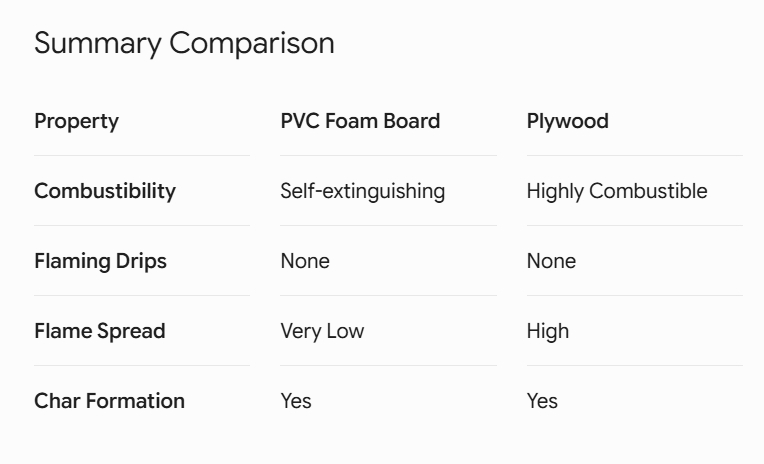
PVC Foam Board is widely recognized for its excellent fire-performance characteristics. In many industries, particularly construction and exhibit design, it is preferred over wood or other plastics because it is inherently self-extinguishing.
Here is a breakdown of the fire-retardant properties of this material:
1. High Ignition Temperature
PVC (Polyvinyl Chloride) has a much higher ignition temperature than most traditional building materials.
Flash Ignition: It typically requires temperatures around 390°C to 450°C to ignite.
Comparison: For context, most types of wood will ignite at approximately 210°C to 260°C. This means PVC foam board is significantly more resistant to starting a fire from a stray spark or small heat source.
2. Self-Extinguishing Nature
Perhaps the most critical safety feature of PVC foam board is that it is "self-extinguishing."
Removal of Flame: If the external flame source is removed, the board will stop burning almost immediately. It does not support combustion on its own.
Carbon Charring: When exposed to intense heat, the material undergoes a "charring" process. It forms a carbonaceous layer on the surface that acts as a thermal barrier, protecting the inner core of the material and slowing the spread of the fire.
3. Fire Safety Ratings
PVC foam boards are typically tested against international fire safety standards. Most high-quality boards achieve the following ratings:
UL 94 V-0: This is a top-tier flammability standard. A V-0 rating means that burning stops within 10 seconds on a vertical specimen, and no flaming drips are allowed.
Class A (ASTM E84): In the United States, many PVC foam boards meet Class A requirements for flame spread and smoke development, which is the highest rating for interior wall and ceiling finishes.
BS 476 Part 7: In other regions, it often meets Class 1 standards, indicating very low flame spread.
4. Smoke and Chemical Behavior
While PVC is fire-retardant, its behavior during a fire involves specific chemical reactions:
Smoke Development: When it does burn, it produces a dense white smoke.
Chlorine Content: Because PVC contains chlorine, it releases hydrogen chloride (HCl) gas when decomposed by heat. Interestingly, this chlorine content is actually what makes it fire-retardant; the chlorine acts as a flame "extinguisher" at the molecular level by quenching the chemical reactions in the flame.

Weather Resistant
PVC Foam Board is engineered to be a "long-life" material, specifically designed to handle the transition from indoor controlled environments to harsh outdoor conditions. Its resistance to aging and weather is a result of its chemical stability and the inclusion of specific protective additives during the manufacturing process.
Here is an analysis of how it handles the elements over time:
1. UV and Sunlight Resistance
Standard plastics often become brittle, "chalky," or yellow when exposed to the sun's ultraviolet (UV) rays.
UV Inhibitors: High-grade PVC foam boards are infused with UV stabilizers. these chemicals absorb or reflect harmful radiation, protecting the polymer chains from breaking down.
Color Retention: While some slight fading can occur over many years in extreme environments (like high-altitude or desert sun), the material generally maintains its color and finish much longer than painted wood or non-stabilized plastics.
Surface Integrity: Unlike low-quality plastics that may peel or flake, PVC foam board maintains a smooth, consistent surface even after years of exposure.
2. Temperature Extremes and Thermal Stability
PVC foam board is designed to remain stable across a wide range of temperatures, though it does have specific thermal limits.
Freeze-Thaw Resistance: Because the material is moisture-proof, it does not absorb water that can freeze and crack the board from the inside (a common issue with concrete and wood). It remains structurally sound in sub-zero temperatures.
Expansion and Contraction: Like all thermoplastics, it will expand in heat and contract in cold. However, its "expanded" foam core allows it to handle these minor dimensional changes without warping, provided it is installed with proper thermal expansion gaps.
Heat Distortion: It is important to note that PVC begins to soften at around 60°C to 65°C. In extremely hot climates, dark-colored boards (which absorb more heat) should be used with caution in direct sunlight to avoid sagging.
3. Corrosion and Chemical Aging
In industrial or coastal areas, "weathering" often includes chemical or salt attacks.
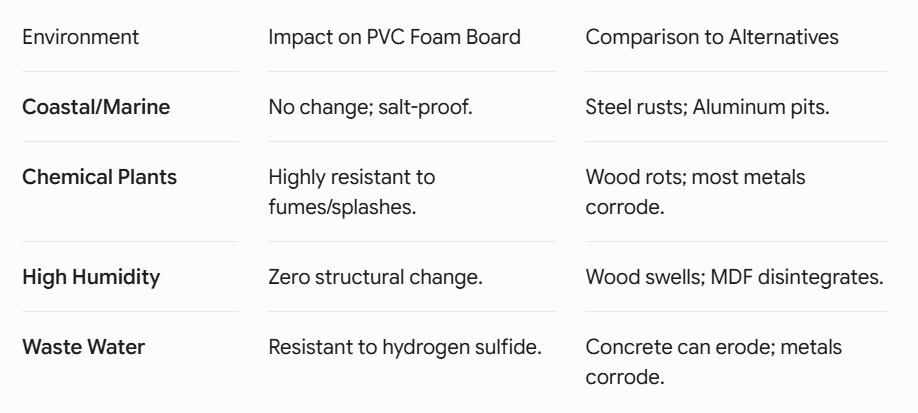
Saltwater Resistance: It is highly resistant to salt spray, making it a standard choice for seaside signage and marine infrastructure. It will not corrode like aluminum or steel.
Pollution Resistance: Acid rain and urban pollutants have virtually no effect on the material’s surface, allowing it to maintain its "new" look in heavy industrial zones.
4. Longevity and "Age-Proofing"
The lifespan of PVC foam board is one of its most significant advantages:
Indoor Lifespan: Practically indefinite. It does not degrade, off-gas significantly over time, or lose its structural bond.
Outdoor Lifespan: Typically 7 to 10 years in direct, harsh exposure before any significant loss in flexibility or surface quality is noticed. In shaded or temperate conditions, this can extend much longer.
No Maintenance: Unlike wood, which requires periodic sanding, painting, or sealing to remain "age-resistant," PVC foam board requires only an occasional wipe-down with water to remove surface dirt.

Corrosion Resistant
PVC Foam Board is a non-metallic, chemically inert material, which makes it fundamentally immune to the types of corrosion that destroy metals and the biological decay that affects organic materials. Its resistance to corrosive environments is one of the primary reasons it is selected for industrial, laboratory, and marine applications.
Here is a detailed breakdown of its corrosion-resistant properties:
1. Immunity to Electrochemical Corrosion
Unlike steel, aluminum, or copper, PVC is a non-conductive polymer.
No Rust or Oxidation: Because it contains no iron, it cannot form iron oxide (rust). It does not require galvanizing, painting, or specialized coatings to prevent surface degradation.
Galvanic Corrosion Resistance: In environments where different metals are joined (like on a boat or in a factory), an electrical current can cause "galvanic corrosion." PVC foam board is an insulator, meaning it can be placed between metal components to break the electrical circuit and prevent this type of damage.
2. Chemical and Acid Resistance
PVC foam board is exceptionally stable when exposed to a wide array of aggressive chemicals. It is frequently used in environments where "chemical corrosion" is a daily reality.
Acid and Alkali Resistance: It stands up well to most strong acids (like sulfuric or hydrochloric acid) and alkalis (like sodium hydroxide) at room temperature. This makes it ideal for laboratory workstations and chemical storage areas.
Saltwater and Brine: One of its most common uses is in "coastal" or "marine" corrosion resistance. Saltwater, which aggressively eats through most metals, has zero effect on the molecular structure of PVC.
Industrial Pollutants: It is resistant to sulfur dioxide and other airborne pollutants that cause "acid rain," which can pit and corrode building facades made of stone or metal.
3. Resistance to Bio-Corrosion
In many environments, "corrosion" is actually caused by living organisms—a process known as microbial-induced corrosion (MIC).
Antibacterial and Antifungal: PVC does not provide a nutrient source for bacteria, fungi, or mold. While surface biofilms can form, they do not "eat" into the board or cause structural pitting.
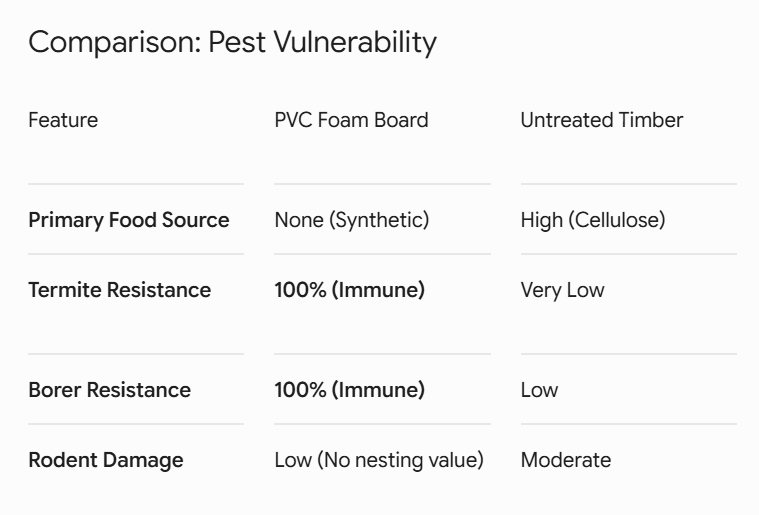
Insect Resistance: Unlike wood, which can be structurally compromised by termites or carpenter ants, PVC foam board is completely impervious to insect damage.
4. Performance in Aggressive Environments

Termite & Pest Proof
PVC Foam Board is naturally and completely immune to damage from termites, carpenter ants, and other wood-boring pests. This "pest-proof" nature is one of the primary reasons it is used to replace timber in ground-contact and high-moisture areas where infestations are common.
Here is why PVC foam board is an impenetrable barrier for pests:
1. Lack of Nutritional Value
The most fundamental reason for its pest resistance is its chemical composition.
Inorganic Material: Termites and other wood-destroying insects survive by digesting cellulose, the organic compound found in wood and paper. PVC (Polyvinyl Chloride) is a synthetic plastic and contains zero cellulose or organic matter.
Zero Attraction: Because it offers no nutritional value, termites have no reason to tunnel into or colonize the board. It is effectively "invisible" to them as a food source.
2. Structural Density and Hardness
The manufacturing process creates a high-density, smooth outer skin that acts as a physical deterrent.
Surface Hardness: The "integral skin" of a high-quality PVC foam board is difficult for small insects to grip or bore into. Unlike softwoods, which have natural fissures and grain that insects can exploit, PVC is a homogenous, solid surface.
Bore-Resistance: Even "expanded" PVC, which has a lighter core, remains too tough for common household pests like cockroaches or silverfish to chew through or damage.
3. Resistance to Secondary Infestations
Pests are often attracted to materials that are already compromised by moisture or decay.
Dry and Rot-Free: Many wood-boring beetles and certain types of termites are attracted to damp or rotting wood. Since PVC foam board does not absorb water and cannot rot, it never develops the "soft" spots that usually signal a hospitable environment for a nest.
Anti-Fungal: By preventing fungal growth, the board removes the secondary food sources (mold and spores) that often attract smaller scavenger insects.
Common "Pest-Zone" Applications
Because it requires no chemical pesticides to remain pest-free, it is a popular choice for:
-
Skirting and Baseboards: Used in areas where dampness might otherwise invite termites from the ground.
-
Outdoor Decking and Trim: Ideal for garden structures that are in direct contact with soil.
-
Kitchen and Bathroom Cabinetry: Prevents the "dark, damp wood" environment that often attracts cockroaches or ants in residential settings.
-
Agricultural Buildings: Used in barns or sheds where wood-boring insects can be a major structural threat.
Technical Note: While the board itself is pest-proof, it does not act as a chemical repellent. Insects can still crawl over it to reach other materials. However, they cannot use the board as a "highway" or a "home," making it a vital component in Integrated Pest Management (IPM) for building design.

Interior & Exterior Use
PVC Foam Board is one of the most versatile materials available because it bridges the gap between lightweight indoor display boards and heavy-duty outdoor construction materials. Its "dual-use" nature is primarily due to its chemical resistance and the specific way it is manufactured.
Here is a breakdown of how it performs in both environments:
Interior Use Properties
In indoor settings, PVC foam board is often used as a superior alternative to MDF, plywood, or corrugated plastic.
Aesthetic Versatility: The smooth, matte surface is ideal for high-resolution UV printing, vinyl lamination, and painting. It provides a "gallery-grade" finish for indoor displays.
Workability: It can be easily cut with a utility knife (in thinner gauges) or a jigsaw, and it can be CNC-routed into complex shapes for interior branding or decorative wall panels.
Safety & Compliance: Because it is self-extinguishing and typically carries a Class A fire rating, it meets strict building codes for use in public spaces, hospitals, and schools.
Lightweight Partitioning: It is an excellent choice for temporary walls or office dividers because it provides decent acoustic insulation without the weight of traditional drywall.
Exterior Use Properties
For outdoor applications, the board is engineered to survive environments that would cause other materials to fail within months.
Weatherproofing: As a closed-cell plastic, it does not absorb rain, snow, or humidity. This prevents the "mushrooming" or swelling typically seen in wooden signs or trim.
UV Resistance: High-quality exterior boards are treated with UV inhibitors to prevent the polymer from becoming brittle or yellowing under direct sunlight.
Corrosion Resistance: It is immune to salt air and industrial pollutants, making it the standard choice for seaside signage and coastal building trim.
Thermal Expansion: While it is weather-hardy, it does expand and contract with temperature changes. Professional installers use "oversized holes" or flexible adhesives to allow the board to move without buckling.

Paintable Solution
PVC Foam Board is a highly popular substrate for printers and painters because its smooth, chemically stable surface allows for excellent adhesion. Unlike wood, which has a grain that can "telegraph" through paint, or metals that require intensive etching, PVC foam board provides a consistent, neutral canvas.
Here is a guide to the paintable properties and best practices for the material:
1. Surface Characteristics
The manufacturing process creates a "matte" finish that is naturally conducive to coating.
Non-Porous Surface: Unlike plywood or MDF, PVC foam board does not "soak up" paint. This means you use less material and achieve a more uniform color with fewer coats.
Consistency: The surface is free of knots, voids, or grain patterns, ensuring that the finished product looks smooth and professional.
Chemically Receptive: The PVC resin is compatible with a wide range of solvent-based and water-based coatings.
2. Best Types of Paint
While the board is versatile, choosing the right "chemistry" is essential for long-term durability:
Acrylic Latices: These are the most common and recommended choice. They remain flexible after drying, which is crucial because PVC expands and contracts slightly with temperature changes.
Vinyl-Based Paints: Since the board is made of vinyl (PVC), these paints create a molecular bond with the surface, making them extremely difficult to peel or chip.
Automotive Urethanes: Often used for high-end commercial signage, these provide a high-gloss, exceptionally durable finish.
Avoid: Rigid oil-based paints or "alky" enamels can become brittle over time. As the PVC board moves with the weather, these brittle paints may crack.
3. Preparation and Adhesion
To ensure the paint sticks permanently, follow these preparation steps:
Cleaning: The most common cause of paint failure is surface contamination. Wipe the board down with Isopropyl Alcohol or a mild detergent to remove fingerprint oils or "mold release" agents from the factory.
Deglossing: While not always necessary, a light sanding with fine-grit sandpaper (320–400 grit) can create a "mechanical key" that helps the paint grip the surface even better.
Priming: For most interior projects, a primer isn't strictly necessary. However, for outdoor use or when using dark colors, a high-quality acrylic primer will ensure the best possible bond.
4. Painting Techniques
PVC foam board handles almost any application method:
Spray Painting: Ideal for achieving a factory-smooth finish. It is the preferred method for 3D letters and architectural trim.
Brushing/Rolling: Works well for larger flat panels. Because the board is non-absorbent, the paint has a longer "open time," allowing brush marks to level out more effectively.
Digital Printing: The material is the industry standard for UV-curable flatbed printing. The ink cures instantly on the surface, resulting in vibrant, sharp graphics.

Screw & Nail Capacity
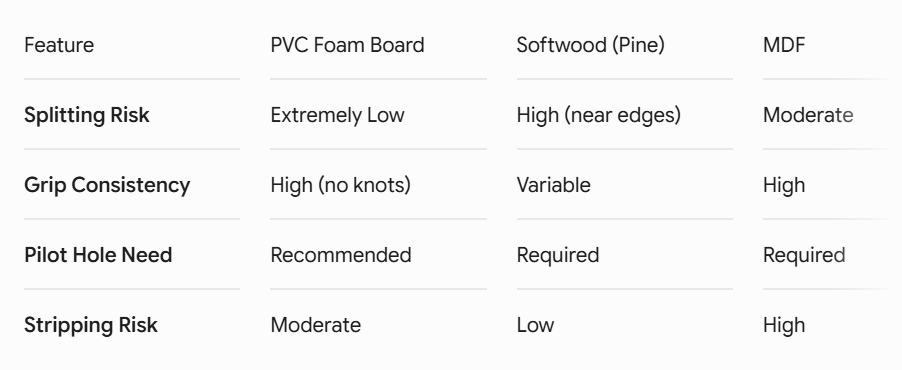
PVC Foam Board handles mechanical fasteners in a way that is very similar to softwood or medium-density fiberboard (MDF). Because it is a homogenous material without a grain, it offers consistent "bite" for screws and nails across the entire surface of the board.
Here is an analysis of its fastening properties:
1. Screw Holding Power
The screw holding capacity of PVC foam board depends heavily on the density of the board (measured in g/cm³).
Mechanical Grip: When a screw is driven into the board, the compressed PVC cells pack tightly around the threads, creating a secure mechanical bond.
Pilot Holes: For thinner boards or edges, drilling a pilot hole (roughly 75% to 80% of the screw's shank diameter) is recommended. This prevents the material from displaced "mushrooming" around the entry point and ensures the threads cut cleanly.
Thread Type: Coarse-thread screws (like woodscrews or specialized "high-low" thread screws) perform best. Fine-thread screws are more likely to "strip" the foam cells if over-tightened.
2. Nailing Capacity
Nailing is a fast and effective way to secure PVC foam board, especially for architectural trim and decorative moldings.
No Splitting: One of the biggest advantages over wood is that PVC foam board does not have a grain. You can nail very close to the edge of the board without the material splitting or cracking.
Power Nailing: The material handles pneumatic brad nailers and finish nailers exceptionally well. The "skin" of the board closes up slightly around the nail head, often making the entry point nearly invisible.
Ring-Shank Nails: For exterior applications where the board might experience thermal movement, stainless steel ring-shank nails are preferred to prevent the nails from "popping" out over time.
3. Best Practices for Fastening
To maximize the strength of your assembly, consider these technical guidelines:
Avoid Over-Torquing: Unlike metal, the internal foam cells can be crushed if a screw is over-tightened. Set your drill clutch to a lower setting so the screw head sits flush without stripping the "threads" it just created in the foam.
Edge Fastening: You can screw into the edge of a board (e.g., building a 90-degree corner box). However, ensure the screw is centered and stay at least 2 inches (50mm) away from the corners to maintain maximum structural integrity.
Stainless Steel for Outdoors: Always use stainless steel or galvanized fasteners for exterior projects. While the board won't rust, the moisture trapped between the board and a standard steel screw can lead to "bleeding" rust stains on your clean PVC surface.
4. Performance Comparison
5. Glue + Fastener "System"
For the strongest possible bond, professionals often use a two-part system:
PVC Cement/Glue: Apply a PVC solvent or cyanoacrylate (super glue) to the joint.
Mechanical Fastener: Use a screw or nail to hold the joint in place while the glue "welds" the two pieces together.
Because PVC foam board is a thermoplastic, the glue actually melts the two surfaces together, making the joint stronger than the board itself. The screw then acts as a permanent clamp.
Note: If you are mounting heavy items (like large TV brackets or heavy shelving) to PVC foam board, it is best to use "through-bolts" with large washers on the back to distribute the load, rather than relying solely on the screw-holding power of the foam core.